The Foundations of Whole-Person Care
Understanding the foundations
Whole-person care brings together scientific knowledge and technical skills with practical wisdom and relational expertise.
These resources explore how recognising complexity, broadening our choices and understanding the influence of everyday habits and organisational cultures can help us offer careful and kind care within the realities of everyday NHS practice.
02 |Broadening our approach
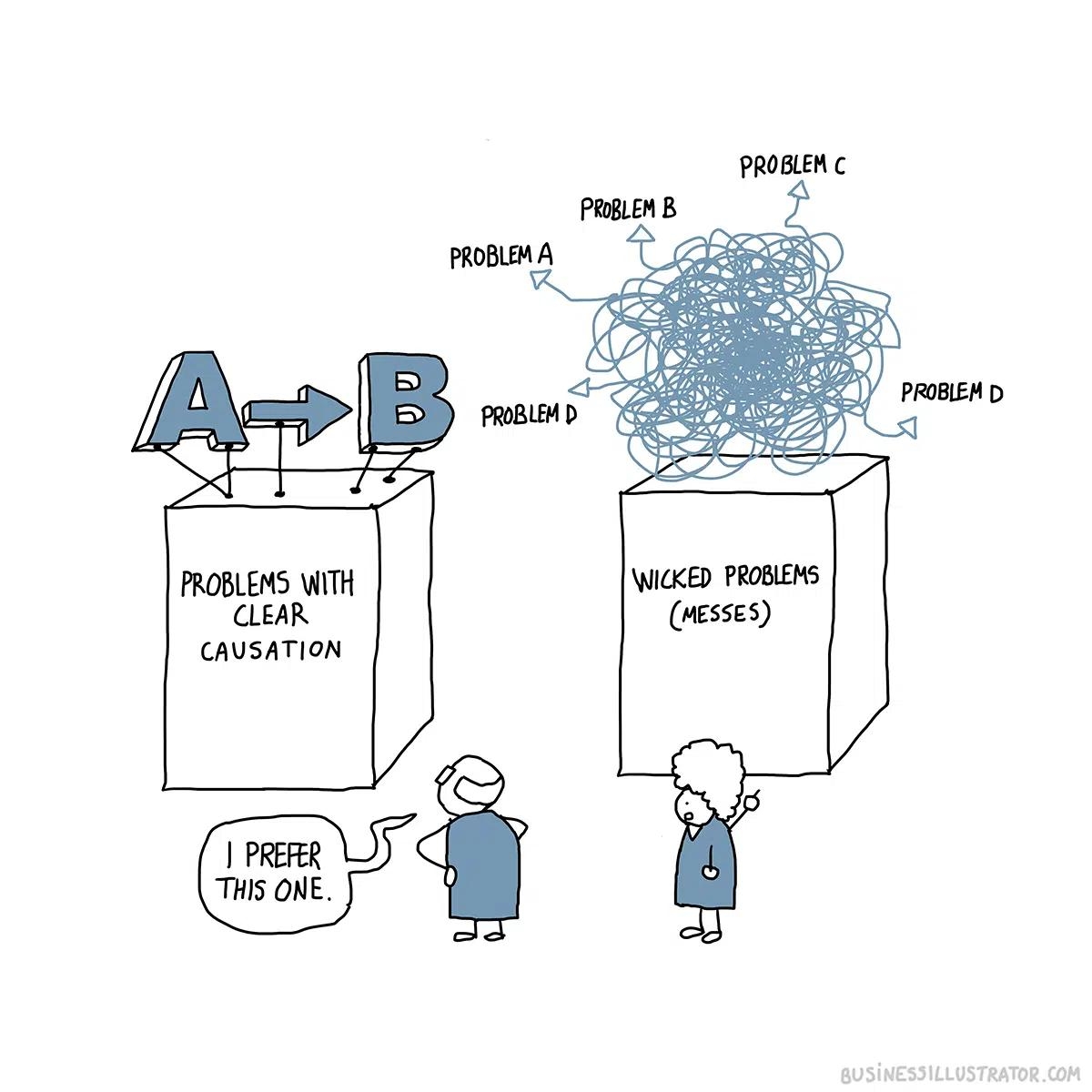
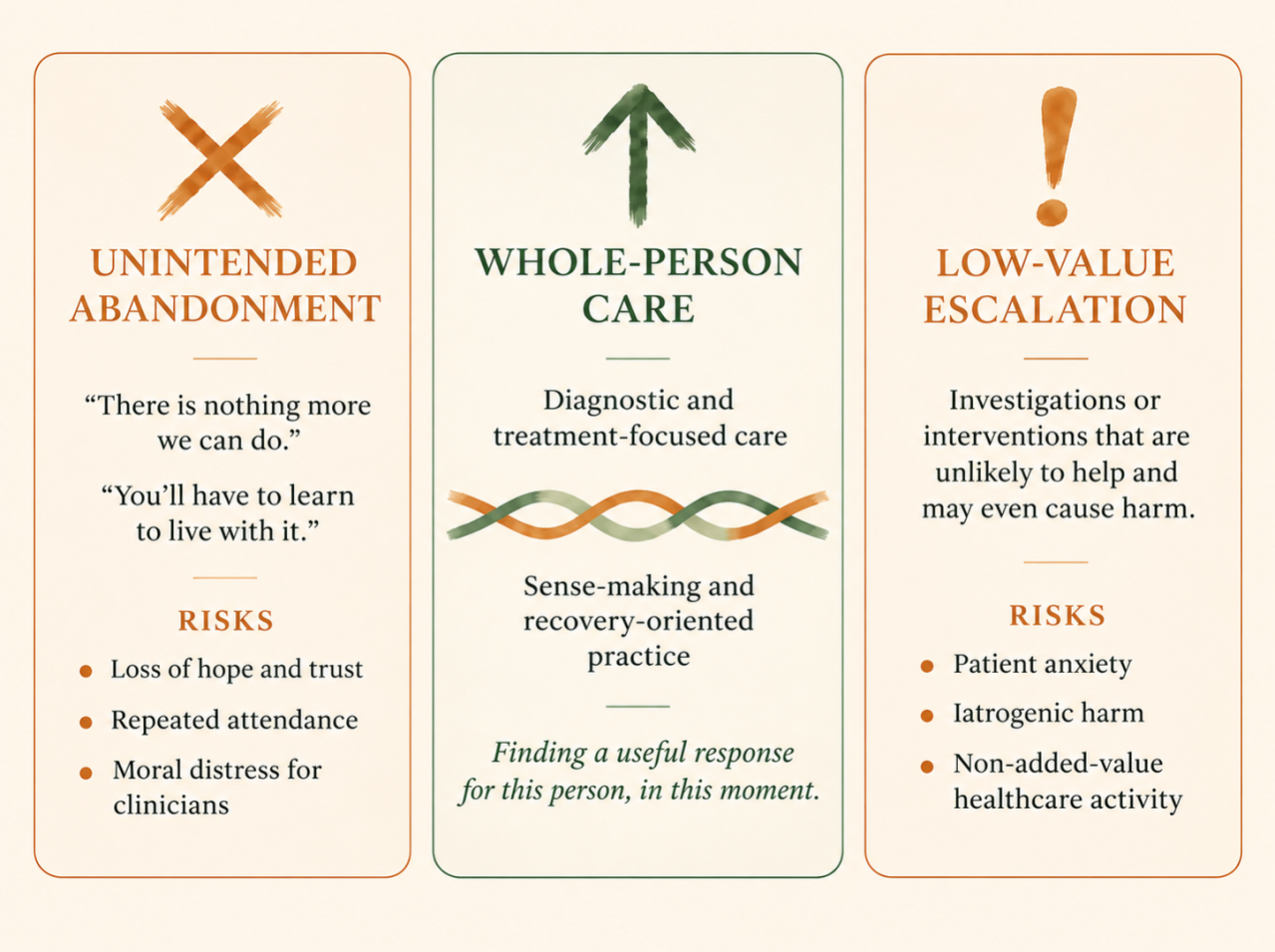
Applying solutions designed for more predictable problems to presentations involving complexity and uncertainty can have unintended consequences. Despite our best intentions, this may lead to low-value escalation (investigations or treatments offering little benefit) or unintended abandonment (people being left without meaningful support).
Diagnostic and treatment-focused care remains essential. The Weave complements this with sense-making and recovery-oriented practice, recognising how we relate and respond can help people understand their experiences and find new ways forward.
Download reflection worksheet →
03 |Reimagining everyday practice
When work feels difficult, our attention can become focused on problems, pressures and constraints.
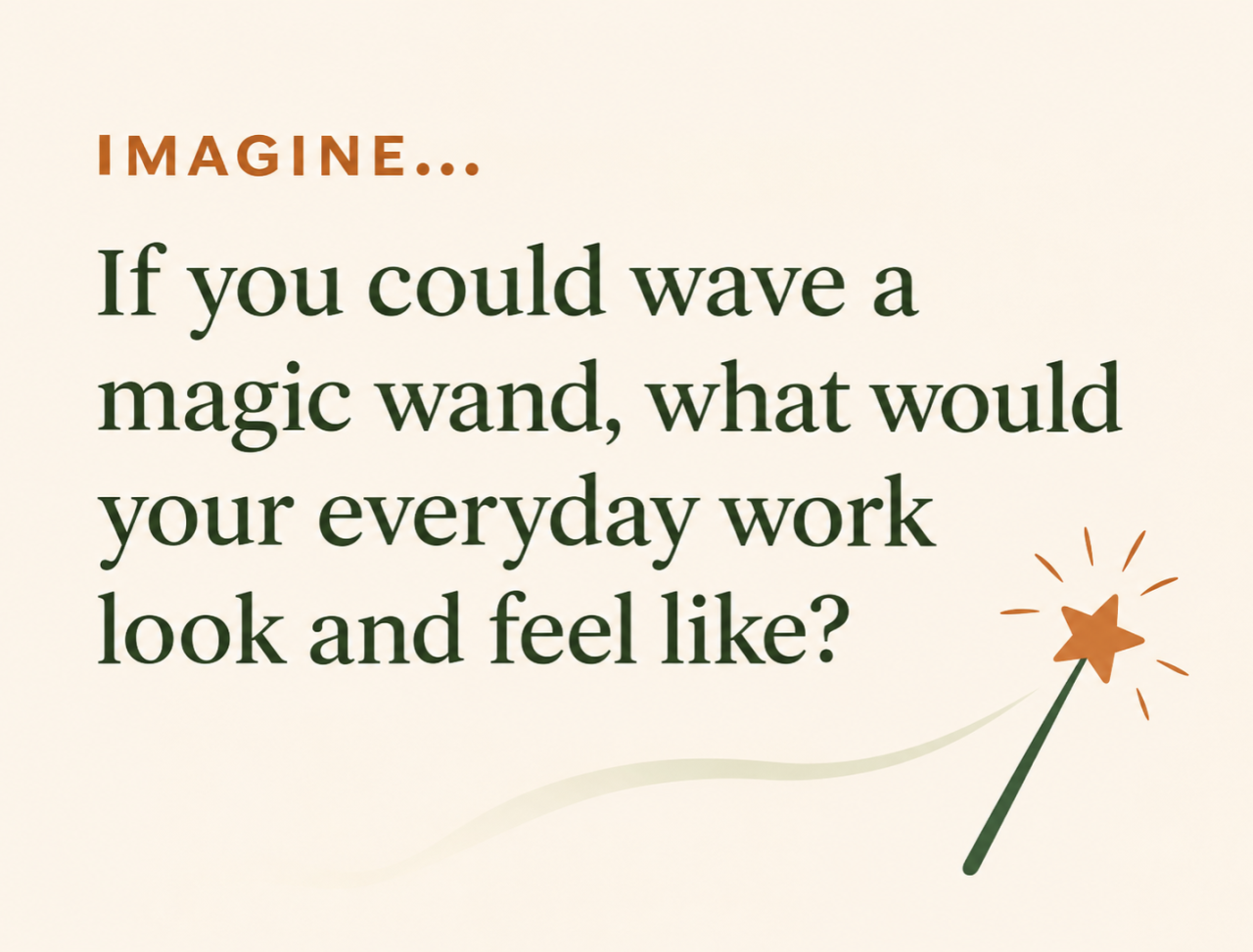
Imagining what a better working day might look and feel like can help us reconnect with what matters, before considering what might be possible within our current circumstances.
Explore the reflective worksheet →
04 |Recognising where we have choices
Healthcare professionals often face challenges they have limited power to change.
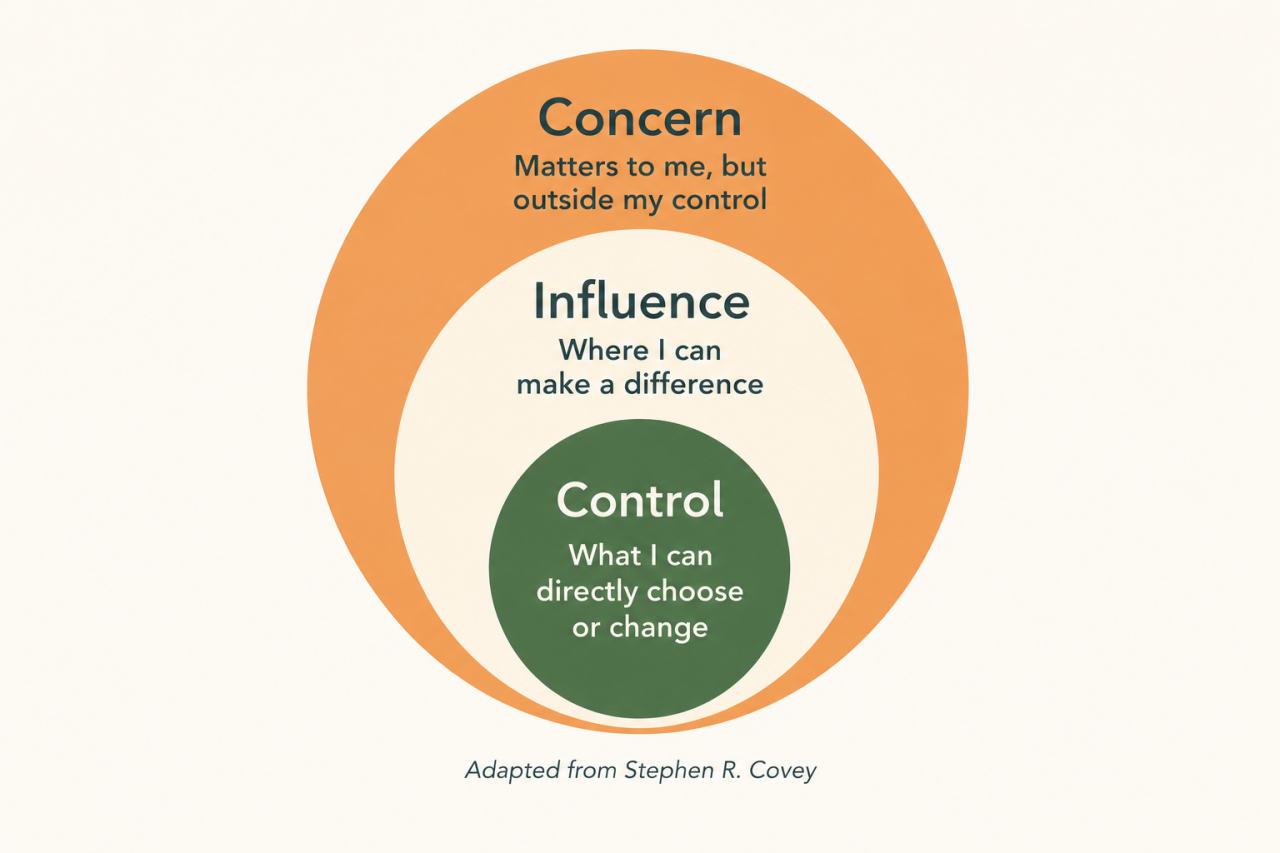
Distinguishing between what concerns us, what we can influence and what lies within our control can help us recognise opportunities to act, individually and collectively.
Even when we cannot change the circumstances, we may still have choices in how we relate and respond. Recognising these choices does not diminish the need for wider system change.
Explore the Circle of Control worksheet →
05 | The 12 Habits of Whole-Person Care
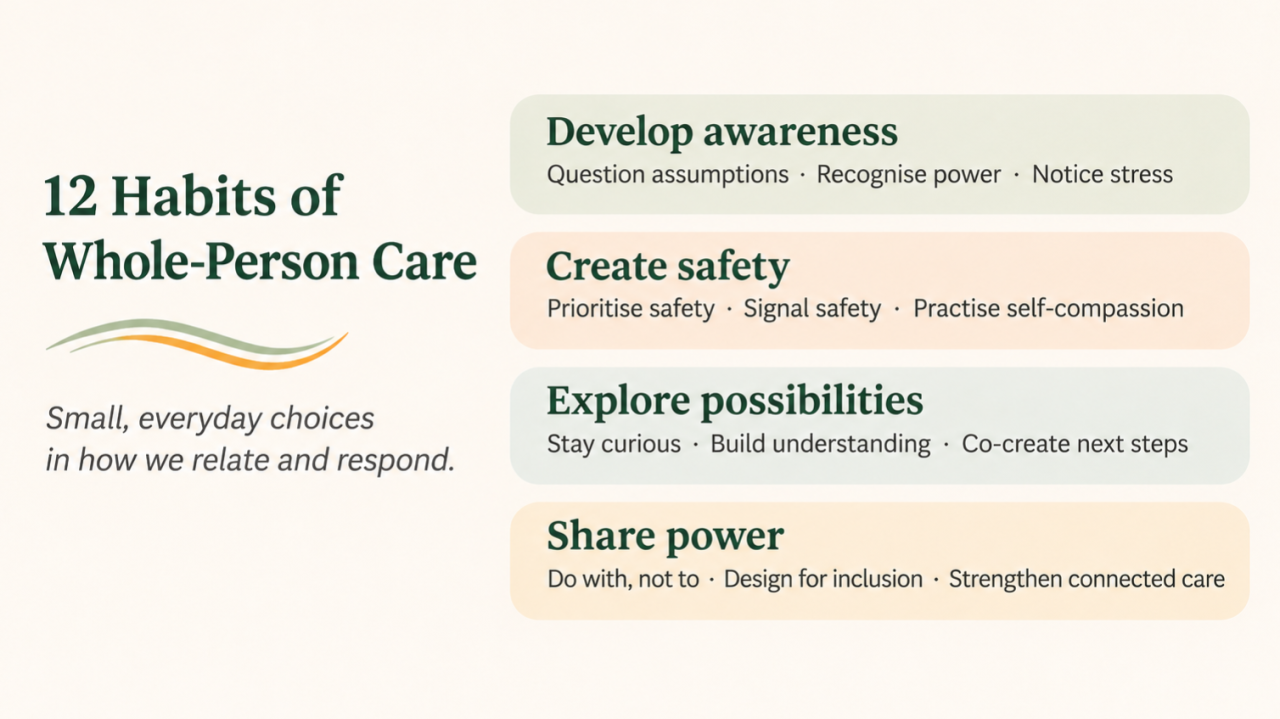
Grounded in principles of safety, trust, choice and collaboration, the 12 Habits invite us to consider how everyday interactions can help people feel heard, make sense of their experiences and participate in decisions about their care.
Explore the 12 Habits →
06 |The Culture Compass
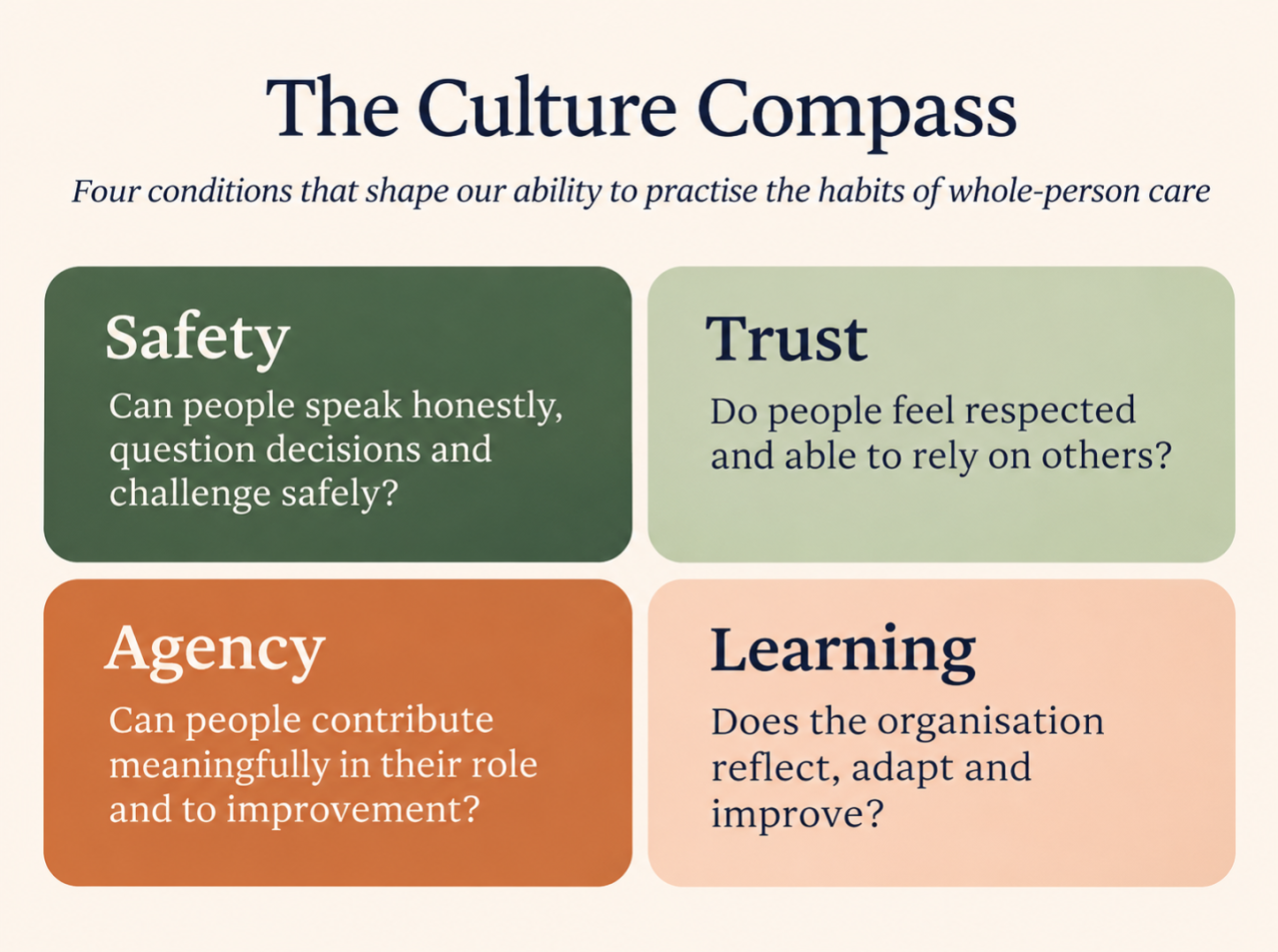
Our ability to practise the 12 Habits is influenced by the cultures in which we work. The Culture Compass invites us to reflect on how safety, trust, agency and learning within our teams and organisations can support or constrain whole-person care.
Explore the Culture Compass →